
Select your language

Social Dude
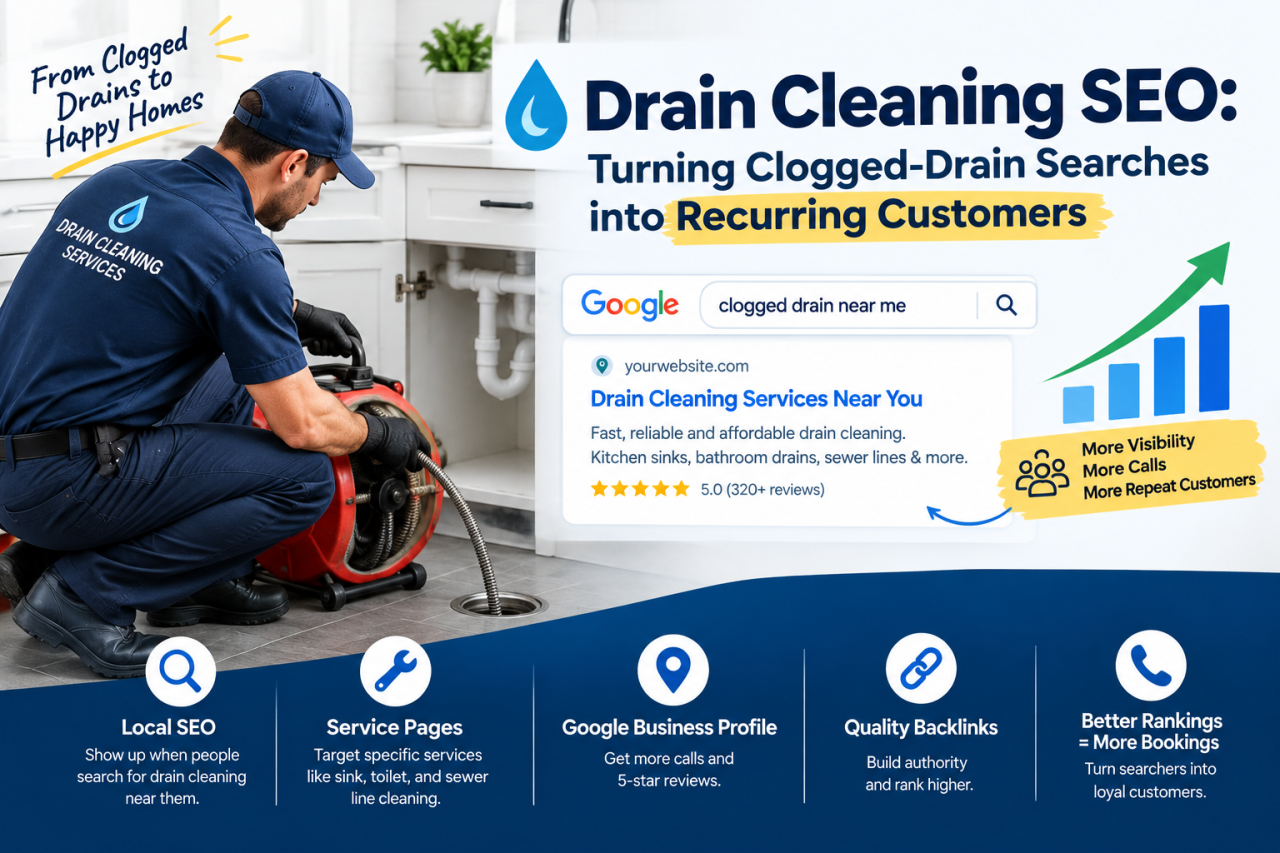
Drain Cleaning SEO: Turning Clogged-Drain Searches into Recurring Customers

Clogged drains are one of the most searched plumbing problems out there, and honestly one of the most repeatable too. Someone with a slow bathroom sink today might be dealing with a backed-up kitchen drain again in eight months, and if you handled that first job well, they'll search for you by name next time instead of typing "drain cleaning near me" all over again. That kind of repeat business starts with getting the basics of plumbing company seo right, since a customer can't become a repeat customer if they never found you in the first place.
This article looks at how people search for drain help, how your website should be structured around that, and how a single clog turns into a customer who keeps calling.
How People Search for Drain Help
Drain problems come in a few different flavors, and each brings a slightly different search.
A lot of people are searching out of pure frustration at the moment. Things like "sink won't drain" or "toilet backed up." These are short, direct, and the person usually just wants a phone number fast.
Others search with a bit more detail because they've already tried fixing it themselves. Something like "drain snake not working" or "why does my shower drain smell." These folks tried a DIY fix, gave up, and now they're a little more informed than the panic searcher above. They tend to appreciate content that explains what's going on before they pick up the phone.
Then there's a recurring problem with crowds. Searches like "why does my drain keep clogging" or "sewer line backing up again." These customers often have something bigger going on, maybe roots, maybe old pipe, and once they understand the real cause, they're usually ready to spend more.
Trying to cover all three of these with one generic "drain cleaning" page rarely works well.
Give Drain Cleaning Its Own Page
Too many plumbers bury drain cleaning inside one giant services page, sandwiched somewhere between water heaters and leak repair. That's a waste, honestly, because drain searches happen constantly and deserve real space of their own.
A good drain cleaning page should walk through the methods you use, snacking, hydro jetting, camera inspection, and when each one makes sense. It should mention the obvious warning signs too, slow drainage, gurgling, bad smells, so people recognize their own situation as they read. And booking needs to be dead simple. Phone number visible without scrolling, maybe a short text option for people who'd rather message than call.
Photos genuinely help more than people expect here. A picture of the hydro jetting truck, or a before and after of a clear pipe, builds more trust in five seconds than a paragraph of text could in five minutes.
Break Content Out by Drain Type
Not every clog behaves the same, and lumping them together on your site means missing a lot of specific searches. Kitchen sink clogs, usually grease and food buildup, get searched differently than bathroom clogs, which tend to come from hair and soap scum. Main sewer line clogs are practically their own category, bigger jobs, bigger price tags.
Writing separate sections, or even separate pages, for kitchen, bathroom, and main line issues opens you up to a much wider range of searches. It also lets you talk more specifically to each one, which tends to convert better than generic advice that could apply to literally anything.
Local Visibility Is Everything Here
Drain cleaning is about as local as a service gets. Nobody's driving across town for a clogged sink, so showing up on Google Maps for nearby searches matters just as much, maybe more, than ranking on the regular results page.
Keep your Google Business Profile current with drain cleaning listed clearly, and push customers to mention it specifically when they leave reviews. Something like "clearing our kitchen drain the same day we called" tells Google exactly what kind of searches your business belongs in.
This matters even more in a state as spread out as California, where a plumber in one metro is up against dozens of others statewide fighting for the same terms. Businesses that lean on plumber seo california tend to handle this better, since regional competition needs a more layered approach than one page trying to cover the whole state.
Write Content That Builds Trust Before They Even Call
Not everyone searching wants to book right away. Some people just want to understand what's happening before deciding whether to call someone or try it themselves. That's honestly a good opportunity, not a wasted click.
A few blog topics that tend to do well specifically for drain cleaning:
What causes a kitchen sink to clog repeatedly
Signs your main sewer line needs a professional
Is it safe to keep using chemical drain cleaners
How often should drains get professionally cleaned anyway
Answering these honestly, even when the honest answer is "you can probably handle this one yourself," builds real trust. Customers remember the business that didn't try to oversell them, and they come back the moment the job is bigger than they can manage alone.
Turning a One Time Job into a Repeat Customer
This is where drain cleaning really separates itself from a lot of other plumbing work. Drains clog again. Grease builds back up, roots keep growing, old pipe keeps causing problems. Do a good job the first time and stay visible, and a good chunk of your future calls end up coming from people who already know your name.
A few things help with this. A simple reminder around six months after a job, mentioning that regular maintenance heads off bigger clogs, keeps you top of mind without being pushy. A light maintenance plan, even something as basic as an annual drain check, gives people a reason to book before there's an emergency. And asking happy customers for a review right after the job, while they're still relieved the mess is gone, builds the kind of review base that keeps pulling in new customers too.
Plan Around the Seasons
Drain problems aren't spread evenly across the year. Kitchen clogs spike around the holidays when everyone's cooking more and pouring grease down the sink without thinking twice. Outdoor drains and sewer issues tend to spike after heavy rain. Getting content ready ahead of these patterns, instead of scrambling once the calls start pouring in, helps you actually rank in time to catch that demand.
This kind of planning matters everywhere, not just California. Plumbers running plumber seo in washington state campaigns deal with heavy rainfall creating its own predictable spikes in drain and sewer searches, which is exactly why timing content ahead of the season usually beats publishing after the fact.
Backlinks Still Move the Needle
Like every other page on your site, drain cleaning content benefits from other sites linking back to it. A local home improvement blog referencing your hydro jetting guide, or a real estate agent linking to your maintenance tips for new homeowners, both signal to Google that your content is worth trusting.
These links work best when they come out of real relationships, not paid packages, which tend to do more harm than good in the long run.
Don't Skip the Fundamentals
None of these matters much if the basics are shaky. Your site needs to load fast on mobile, your phone number should be a tap to call button, not just plain text, and your business details need to match everywhere online. These are the same fundamentals behind any solid local Seo strategy, and they matter most on the exact pages where someone's deciding whether to call right now or keep scrolling.
Final Thoughts
Drain cleaning might look like a small, routine job next to a full repipe or a water heater replacement, but it's genuinely one of the most reliable sources of repeat business a plumber can build. Give it a real page, speak directly to the different kinds of clogs people search for, stay visible locally, and follow up once the job's done. Stick with it and drain cleaning stops being a one-off call; it becomes one of the steadiest parts of the whole business.
About the author
Categories










Comments