
Select your language

Social Dude
Porcelain Benchtop: The Ultimate Guide for Kitchens and Bathrooms by MasterTops

In recent years, porcelain benchtops have surged in popularity among homeowners, designers, and contractors. They blend the elegance of natural stone with the durability of engineered surfaces, making them a compelling choice for modern kitchens and bathrooms. At MasterTops, we've helped countless clients choose, install, and maintain porcelain benchtops that stand up to daily use while looking pristine for years. This comprehensive guide covers everything you need to know—from materials and benefits to maintenance, costs, and real-world applications.
What is a porcelain benchtop?
A porcelain benchtop is a solid-surface countertop made from high-fired, ultra-compact porcelain. Unlike ceramic tiles, porcelain benchtops are manufactured as one continuous slab, offering a seamless, non-porous surface with exceptional resistance to staining, heat, and scratches. The material's dense composition and low water absorption make it highly durable in both kitchen and bathroom environments.
Key features:
- Non-porous surface: Stain resistance and hygienic properties
- High durability: Excellent scratch and impact resistance
- Heat resistance: Handles hot pots and pans (although use trivets is still recommended)
- Low maintenance: Easy cleaning with mild cleaners
- Aesthetic versatility: Wide range of colors, veining, and finishes
Why choose a porcelain benchtop? Benefits and use cases
Superior durability for busy spaces Porcelain is renowned for hardness and resilience. In high-traffic kitchens, a porcelain benchtop withstands daily wear, preventing chips and scratches that plague softer materials. Its low porosity means spills—coffee, wine, oil—wipe away without staining.
Hygienic and low-maintenance surface
Porcelain's non-porous composition resists bacteria and mold growth. Regular cleaning with a soft cloth and mild detergent keeps the surface pristine. There is no need for sealants or special treatments, which simplifies long-term maintenance.
Wide aesthetic range
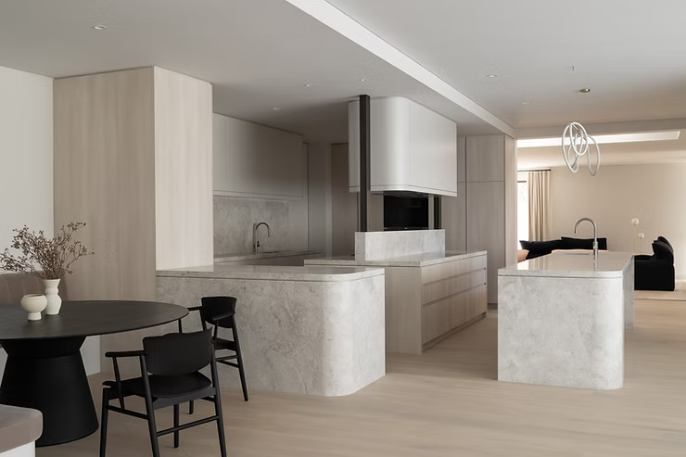
From classic marble-look veining to solid hues and matte or polished finishes, porcelain benchtops offer design flexibility. It pairs beautifully with stainless steel, timber, glass, and bold cabinet colors—making it suitable for contemporary or traditional kitchens.
Heat and stain resistance
While no countertop is entirely impervious to extreme conditions, porcelain performs exceptionally well under heat and common staining agents. Placing hot pans directly on the surface is generally discouraged as a precaution; using a trivet protects both the benchtop and its finish.
Porcelain benchtop vs. alternatives: How it stacks up
Porcelain vs. quartz
- Durability: Both are highly durable; porcelain edges ahead in chemical resistance and stain resistance in some finishes.
- Porosity: Both are non-porous when properly manufactured, reducing staining risks.
- Aesthetics: Quartz offers a consistent look; porcelain can mimic natural stone with more variation.
- Maintenance: Both low maintenance; neither requires sealing.
Porcelain vs. natural stone (granite, marble)
- Porcelain: Consistent, non-porous surface with less susceptible to staining or etching (although finishes vary by product line).
- Natural stone: Unique veining and color patterns; more porous and may require sealing and periodic maintenance.
Porcelain vs. solid surface (eg, acrylic)
- Porcelain: Higher heat and scratch resistance; more durable in commercial-grade applications.
- Solid surface: Can be repaired more easily; seams are less noticeable in some designs, but porcelain offers a more premium, durable look.
Design options and installation considerations
Finishes and looks
- Matte, satin, and polished options provide different light reflections and textures.
- Styles range from marble-inspired veining to solid colors, with a variety of edge profiles (square, eased, rounded, waterfall).
- Aggregate options allow you to tailor thickness, edge detail, and overall kitchen aesthetics.
Edge profiles
- Square or beveled edges offer a contemporary look and are easier to maintain.
- Ogee or softer profiles provide a more traditional feel but require meticulous fabrication and maintenance.
Size, seams, and installation
- Slab sizes vary by manufacturer; larger slabs reduce the number of seams and create a cleaner appearance.
- Proper substrate preparation and professional installation are crucial to ensure flatness and long-term performance.
- ETAs vary by project complexity; plan for plumbing, sink cutouts, and integration with backsplashes.
Maintenance and care: Best practices from MasterTops
Daily cleaning
- Use a soft, damp microfiber cloth with a mild pH-neutral cleaner.
- Wipe spills promptly to avoid any possible staining, especially with highly pigmented liquids.
Stain prevention and care
- Avoid harsh chemical cleaners (bleach or ammonia) on a regular basis; if used, rinse thoroughly.
- Use cutting boards to prevent knife scratches, even though porcelain is highly resistant.
Heat management
- Always use trivets or heat pads under hot cookware. While porcelain is heat resistant, sudden, extreme heat can cause surface shock or dulling over time.
Sealing and coatings
- Most porcelain benchtops are non-porous and do not require sealing. Check with MasterTops for your specific product line, as some specialized finishes may have different care guidelines.
Stain and damage repair
- For light scratches or minor marks, a non-abrasive cleaner and a soft pad may help. Deep scratches or chips typically require professional repair or panel replacement.
Popular applications: Where porcelain benchtops shine
Kitchens
- Food preparation zones: durable and easy to sanitize.
- Islands: a statement focal point with high-contrast or versatile veining.
- Wet areas: near sinks and dish stations, where a non-porous surface is advantageous.
Bathrooms and bar areas
- Vanity tops: moisture resistance and cleanability are ideal for humid environments.
- Bar counters: the surface handles high traffic and cleaning with minimal maintenance.
Sourcing and pricing: What to expect
Factors that influence costs
- Slab size and availability: Larger, unique veining patterns may command higher prices.
- Edge detail and finish: Custom edges add to costs.
- Installation complexity: Undercounter sinks, integrated backsplashes, or unusual shapes may require additional labor.
Budgeting tips
- Plan for a single or minimal number of seams in high-visibility areas.
- Choose a finish that aligns with your lifestyle; matte finishes can show water spots more easily in bright kitchens, whereas polished finishes reflect more light and can accentuate color.
MasterTops expertise: Why choose us for porcelain benchtops
Proven expertise and design support
MasterTops combines material science knowledge, kitchen design expertise, and precision fabrication to deliver countertops that meet both aesthetic and functional goals. Our team guides you through material selection, edge detailing, color coordination, and installation scheduling.
Quality and warranty We source from reputable porcelain manufacturers with strict quality controls and provide warranties that reflect our confidence in performance and durability.
Custom solutions From classic kitchens to contemporary spaces, MasterTops offers tailored solutions—sizing, edge profiles, and integrated features such as sinks and backsplashes—delivered with precision.
FAQs
Q1: Are porcelain benchtops harder than quartz?
Porcelain benchtops are extremely durable and highly resistant to staining and scratching, often comparable to quartz. Some porcelain finishes can offer superior chemical resistance, depending on the manufacturer.
Q2: Do porcelain benchtops stain easily?
No. Porcelain is non-porous, which minimizes staining from common kitchen and bathroom spills. Prompt cleaning helps maintain a pristine surface.
Q3: Can I place hot pots on a porcelain benchtop?
While porcelain is heat resistant, it's best practice to use a trivet or hot pad to protect the surface from potential heat shock or discoloration over time.
Q4: Do porcelain benchtops require sealing?
Most porcelain benchtops do not require sealing because they are non-porous. Always verify with your supplier, as some specialty finishes may have different care instructions.
Q5: How long does installation typically take?
Installation time varies by project size and complexity, but a standard kitchen bench with integrated features generally takes 1–3 days, including fabrication and fit-out. Your MasterTops project manager will provide a precise timeline.
Q6: What is the maintenance routine for a porcelain benchtop?
Regular cleaning with a mild, non-abrasive cleaner and a soft cloth is typically sufficient. Avoid harsh chemicals and abrasive scrubbing pads; use a cutting board to protect the surface.
Q7: How long does a porcelain benchtop last?
With proper care and professional installation, porcelain benchtops can last decades, maintaining their appearance and structural integrity.
Q8: How does MasterTops ensure color consistency across slabs?
We work with trusted manufacturers and maintain rigorous quality controls, including color-matching processes and sample verification before fabrication.
Q9: Can porcelain benchtops mimic marble or natural stone?
Yes. Porcelain can replicate marble veining and other natural stone patterns with high fidelity, offering the look of stone with enhanced durability and cleanliness.
Q10: What are common edge profiles for porcelain benchtops?
Edge profiles range from square and eased to radiused, beveled, and more intricate designs. The chosen profile impacts the visual weight and maintenance considerations.
About the author
Categories










Comments